
The New Mosquito Map: Managing Vector-Borne Disease Risk in Familiar Business Destinations
West Nile virus has reached 1,285 cases across 15 European countries, dengue is active in over 90 nations, and chikungunya has triggered a CDC Level 2 notice for Nicaragua — the mosquito-borne disease map no longer respects the boundary between "tropical" and "safe"
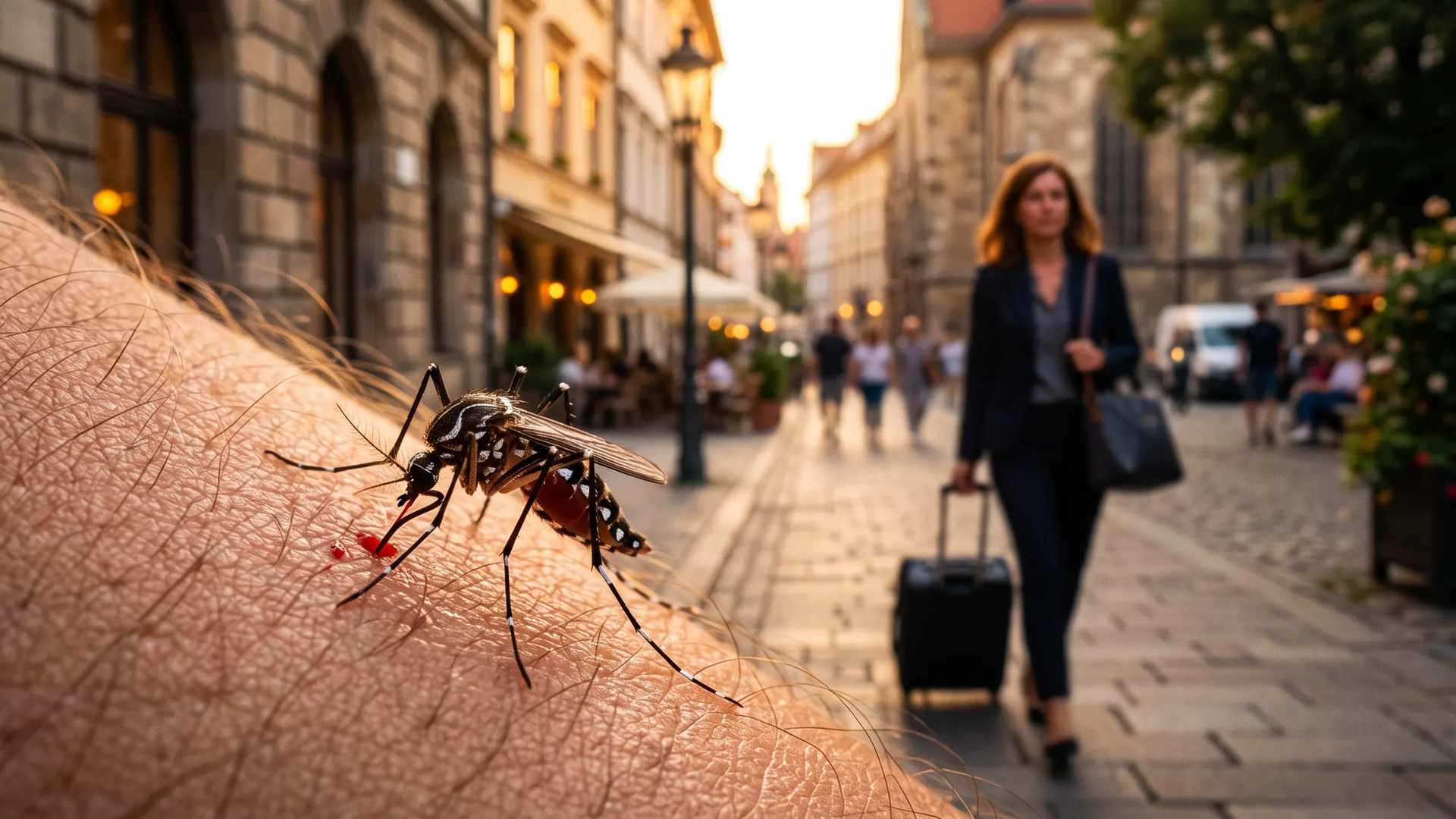
Ask most corporate travel managers to name their top mosquito-borne disease concerns and the answers cluster around the same familiar geography: Southeast Asia, sub-Saharan Africa, the Amazon basin. That mental map is now dangerously out of date. As of September 2026, West Nile virus has been locally acquired by 1,285 people across 15 European countries — including Spain, France and the Netherlands, where human cases had not been recorded since 2020. Dengue is active in more than 90 countries and more than 1.37 million cases have been reported in the Americas alone this year. Chikungunya has prompted a CDC Level 2 Travel Health Notice for Nicaragua, with 1,384 reported cases concentrated in the Managua region. None of these destinations sits at the edge of a corporate travel programme. All of them are on the itineraries of business travellers right now. The challenge for duty-of-care teams is not to generate alarm about every trip to Madrid or Miami. It is to replace a geography-based assumption — "this destination is safe from mosquitoes" — with an itinerary-based assessment that accounts for season, venue, activity and exposure window. This briefing sets out what the 2026 surveillance data actually shows, where the complacency gaps are, and how to build a proportionate, executable response.
Why the "Tropical Disease" Frame Is Failing Corporate Travel
The category of "tropical disease" was always a simplification, but in 2026 it has become operationally misleading. The Aedes aegypti and Aedes albopictus mosquitoes that carry dengue and chikungunya have expanded their range steadily northward as temperatures rise, and they are now established vectors in parts of southern and central Europe. Culex mosquitoes, which transmit West Nile virus, have always been present across temperate zones — what changes year to year is the intensity of viral circulation, driven by bird migration patterns, summer temperatures and rainfall. The result is that a business traveller attending an outdoor conference dinner in Madrid in September, or a site inspection in the Netherlands, or a client reception in southern France, faces a measurable mosquito-borne disease exposure that their pre-trip briefing almost certainly did not mention. The gap between the risk that exists and the risk that is communicated is where duty-of-care failures happen. Closing it does not require treating every European trip as a malaria expedition. It requires replacing the binary "tropical/non-tropical" filter with a seasonal, city-level, activity-specific assessment.
West Nile Virus: The European Picture in September 2026
As of September 10, 2026, the European Centre for Disease Prevention and Control (ECDC) had recorded 1,285 locally acquired West Nile virus cases across 15 countries and 161 affected areas. The headline case counts by country include Spain with 104 cases, France with 49 and the Netherlands with 19 — the first human cases in the Netherlands since 2020, described by ECDC as a notable development. Italy and Greece carry the heaviest burden and the highest mortality: as of September 3, Europe had recorded 61 WNV-attributed deaths, primarily in Italy with 25 and Greece with 24. In the United States, the CDC had recorded 504 provisional human cases as of September 8, including 363 neuroinvasive cases and 141 non-neuroinvasive, with 2 deaths and 28 presumptive viremic blood donors. These figures are provisional and subject to upward revision as reporting catches up. Critically, approximately 80% of WNV infections are asymptomatic, and many mild illnesses are never tested — so reported case counts substantially understate total infection volume. The high proportion of neuroinvasive cases in surveillance data partly reflects how the system preferentially detects serious disease. For travel risk managers, the operational implication is clear: West Nile virus is not a background noise issue in Europe or the United States this September. It is an active, geographically distributed risk that warrants inclusion in pre-trip briefings for outdoor-heavy itineraries in affected regions.
Dengue and Chikungunya: The Americas and Beyond
Dengue remains the world's most widely distributed mosquito-borne viral disease, and 2026 has continued that pattern. By July 31, global surveillance had recorded more than 1.5 million cases and 500 deaths across more than 90 countries. The Americas accounted for more than 1.37 million of those cases by July 23. Business-relevant destinations with elevated or active dengue transmission include Brazil, Mexico, Cuba, Puerto Rico, the Dominican Republic and Colombia in the Americas; Sri Lanka, Vietnam, the Philippines, Malaysia, Thailand and Bangladesh in Asia; Kenya, Sudan and Saudi Arabia in Africa and the Middle East; and Cambodia, Laos and Pacific island destinations in the Western Pacific. Cuba had met criteria for high transmission as of September 2 and had been associated with elevated infections among travellers. The CDC's standing Global Dengue Travel Health Notice is Level 1 — "practice usual precautions" — but risk managers should not read "usual" as "low." A two-day visit involving sealed offices and air-conditioned transport presents a different exposure profile from a conference reception held outdoors in the same city and week. On chikungunya, Nicaragua is the current focal point: 1,384 MINSA-reported cases between May 23 and August 8, with 402 in the week ending August 1 and 356 in the week ending August 8, concentrated in the Managua region. The CDC issued a Level 2 Travel Health Notice on August 3. These are reported figures from a limited surveillance environment and likely understate the true burden, but they are sufficient to warrant enhanced precautions for any Managua itinerary.
The Complacency Gap: When Familiar Destinations Lower the Guard
The most operationally significant finding from 2026 surveillance is not the absolute case counts — it is the geography. When a traveller hears "Spain," "France," "the Netherlands" or "the United States," their mental model does not include mosquito-borne disease risk. That cognitive gap is the complacency problem. It means pre-trip briefings are not issued, repellent is not packed, outdoor evening events are attended without protection, and post-return symptoms are not reported promptly because the traveller does not connect a fever in London to a dinner reception in Seville three weeks earlier. The correct response is not to portray every trip to a European capital as high risk. It is to assess the actual exposure window: Is competent-vector activity being reported during the travel dates? Will the traveller attend outdoor dinners, evening receptions, site inspections or sporting events? Are the hotel and venue air-conditioned or properly screened? Does the itinerary include peri-urban or suburban locations not reflected in the city label? Biting patterns also matter for the controls applied. Aedes mosquitoes linked to dengue and chikungunya are primarily active during the day and early evening — meaning daytime outdoor meetings, lunches and commutes are exposure windows, not just evening events. West Nile virus prevention should focus particularly on evening, dusk-to-dawn and overnight exposure. Where malaria is present, dusk-to-dawn protection and destination-indicated chemoprophylaxis remain essential.
An Executable Protocol for Short Business Trips
Short duration does not eliminate exposure — it compresses preparation time and concentrates the traveller's schedule into multiple venues, transfers and hosted events. Before departure, trigger a clinic review four to six weeks ahead where feasible, covering the precise itinerary, traveller health profile, applicable vaccination options and malaria prophylaxis where destination-specific guidance indicates. Late bookings should still receive an assessment rather than being treated as too late for intervention. Assess the actual itinerary — cities, travel dates, airport transfers, accommodation, meeting venues, outdoor events and planned side trips — rather than relying on a country-wide rating alone. Verify property and event controls: prefer air-conditioned accommodation or rooms with intact door and window screens, and establish whether conference venues and reception areas are enclosed or exposed. Issue a practical kit containing an EPA-registered repellent with DEET, picaridin, IR3535, oil of lemon eucalyptus, para-menthane-diol or 2-undecanone, together with clear label-use instructions. During the trip, apply sunscreen first and allow it to settle, then apply repellent as the outer layer, reapplying according to label instructions. Use repellent consistently during daytime and early-evening exposure in dengue or chikungunya settings, and reinforce evening and overnight protection for West Nile or malaria risk. On return, any fever or compatible illness — headache, muscle or joint pain, rash or vomiting — should prompt same-day clinical triage. Until dengue has been excluded by an appropriate clinician, the traveller should avoid aspirin and ibuprofen because of bleeding risk. Travellers should continue bite prevention for three weeks after return, even if well, to reduce the possibility of transmitting an infection to local mosquitoes.
Mapping Mosquito-Borne Risk Controls to ISO 31030
ISO 31030 provides guidance for managing risks associated with organisational travel and offers a natural framework for structuring mosquito-borne disease controls. Under governance, responsibility should be assigned across travel management, security, human resources, occupational health and assistance providers — mosquito-borne disease sits at the intersection of all of them. Risk identification and assessment should evaluate destination, city, season, traveller profile, accommodation type and activity-specific exposure rather than relying on country-level labels. Proportionate treatment means matching controls to the localised risk: routine bite prevention for a low-exposure itinerary, venue changes or enhanced precautions for a high-exposure one. Communication and consultation should provide targeted pre-trip information and maintain confidential two-way reporting — travellers need a clear, non-stigmatising route to report symptoms after return. Incident and emergency response should define same-day triage pathways, emergency warning signs (severe headache, neck stiffness, confusion, severe abdominal pain, persistent vomiting or mucosal bleeding), assistance provider contacts and malaria escalation protocols. Monitoring and review should track surveillance changes, briefing completion rates, alert acknowledgement and the timeliness of symptom reporting — not disease incidence alone, since employee infections are too uncommon and surveillance too incomplete to function as the sole measure of programme quality.
Building a Proportionate Mosquito-Borne Disease Response
Replace Country Labels with Itinerary Assessments
A country-level rating cannot capture seasonal, city-level or venue-specific exposure. Assess travel dates, outdoor event schedule, accommodation type and local vector activity for every itinerary.
Brief for Familiar Destinations Too
Spain, France, the Netherlands and the United States all have active West Nile virus transmission in September 2026. Travellers to these destinations need the same bite-prevention briefing as those heading to traditionally recognised risk areas.
Match Controls to Biting Patterns
Aedes mosquitoes (dengue, chikungunya) are active during the day and early evening. Culex mosquitoes (West Nile) peak at dusk and overnight. Apply the right protection at the right time — not just at evening events.
Issue Repellent Kits Proactively
Make EPA-registered repellent (DEET, picaridin, IR3535 or equivalent) available to all travellers heading to affected regions, including last-minute bookings. Do not rely on travellers to source it themselves.
Establish a Confidential Post-Return Reporting Route
Any fever or compatible illness within three weeks of return should trigger same-day clinical triage. Give travellers a clear, non-stigmatising contact — occupational health or travel assistance — and explain when to use it.
Avoid Aspirin and Ibuprofen Until Dengue Is Excluded
Dengue can cause severe bleeding complications. Until a clinician has excluded dengue, travellers with fever should avoid NSAIDs. Brief travellers on this before departure, not after symptoms appear.
The mosquito-borne disease map of September 2026 does not look like the one most corporate travel programmes were built around. West Nile virus is circulating across 15 European countries. Dengue is active in more than 90 nations. Chikungunya has prompted a CDC Level 2 notice for a Latin American capital that sits on many corporate itineraries. None of this makes business travel to these destinations unmanageable — but it does make the old binary of "tropical risk" versus "safe destination" operationally indefensible. The organisations that will handle this well are not the ones that issue blanket warnings or restrict travel to familiar cities. They are the ones that assess each itinerary on its actual exposure profile, brief travellers on the specific risks of their specific trip, equip them with the right tools, and maintain a confidential, low-friction route for post-return symptom reporting. Mosquito-borne disease risk is seasonal, localised and largely forecastable. The surveillance data exists. The protocols are established. The gap is in applying them consistently to destinations that do not feel like they need it — until they do.
Contact TRSS to integrate mosquito-borne disease risk into your travel health programme and pre-trip briefing framework
Get in Touch