Fit to Travel: Why Medical Clearance Is the Duty-of-Care Gap Most Travel Programmes Miss
From school expeditions to corporate deployments, a proper medical clearance process is one of the most powerful — and most overlooked — duty-of-care tools an organisation has. Here is why it matters, and what good looks like.
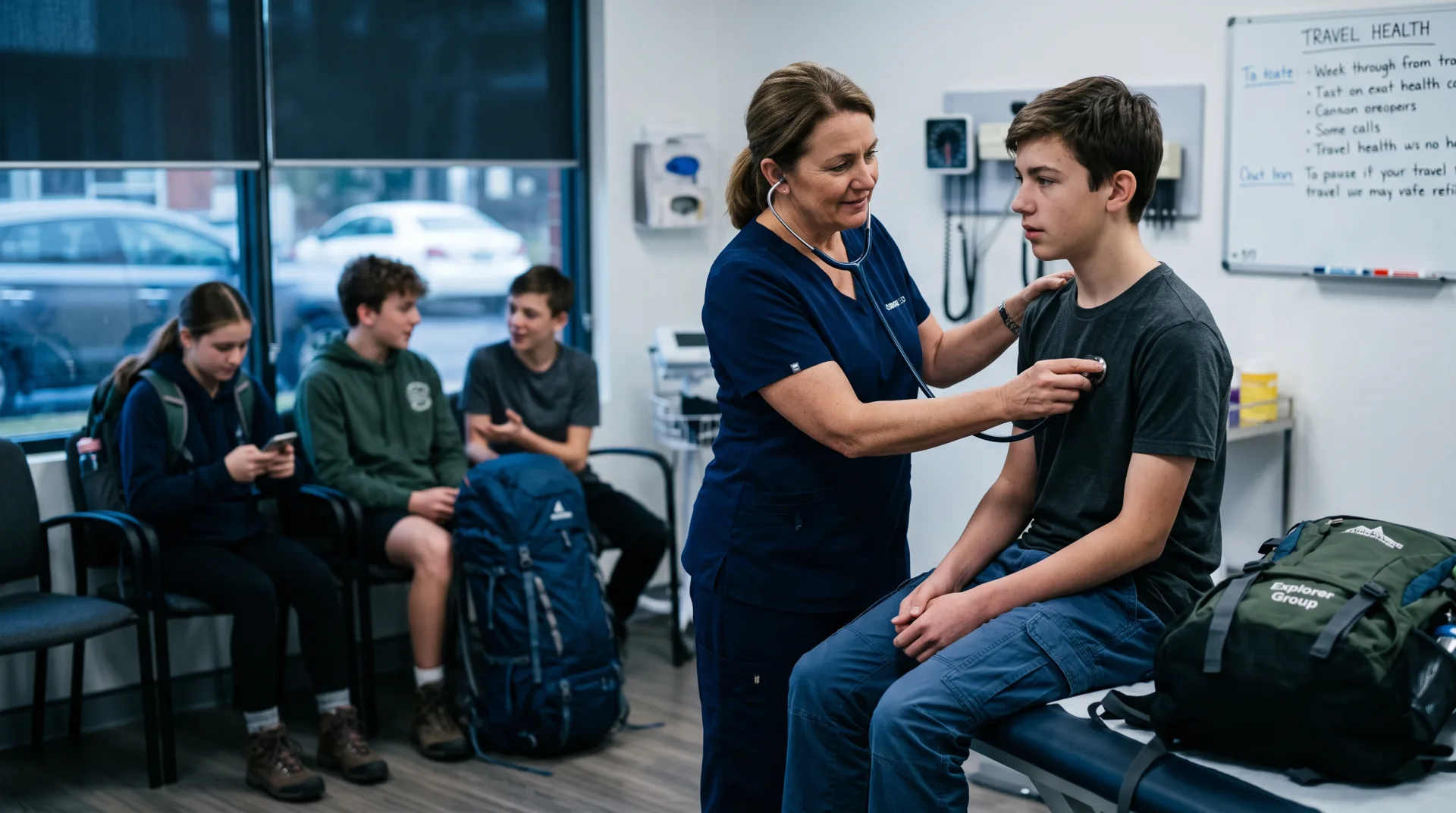
Ask most trip organisers about their biggest travel risks and they will point outward — the destination, the activity, the political situation, the weather. Far fewer point to the person actually getting on the plane. Yet an undisclosed heart condition, a poorly managed diabetes, a severe allergy without an emergency plan, or a mental-health crisis building quietly before departure can bring a trip down faster and more tragically than almost any external threat. Medical clearance — the structured process of establishing that a traveller is fit for the specific trip they are about to take — is where duty of care becomes concrete. Done well, it is quiet, proportionate and largely invisible. Done badly, or not at all, it is the gap that turns a manageable condition into an emergency thousands of miles from help.
What Medical Clearance Actually Is
Medical clearance is not a form; it is a decision. It is the process of gathering the health information relevant to a specific trip — conditions, medication, allergies, mobility, mental health — assessing it against the demands and destination of that trip, and reaching a documented judgement about whether the person is fit to travel, fit to travel with a plan in place, or not fit to travel as things stand. The crucial word is “specific”. A city conference and a high-altitude trek are not the same trip, and the same traveller may be comfortably cleared for one and require careful management for the other. A good clearance process is therefore proportionate: light-touch where risk is low, rigorous where it is high, and always ending in a clear, recorded outcome rather than an unread PDF in an inbox.
Why School Groups and Youth Expeditions Raise the Bar
For school trips and youth expeditions the stakes are higher on every axis. Participants are minors, so the information comes from parents and guardians and the consent framework is more demanding. Groups are large, which means volume: dozens of declarations to collect, review and act on against a fixed departure date. And the activities — fieldwork, expeditions, adventurous pursuits abroad — are exactly the ones BS 8848 was written for. Under that standard the venture provider holds a single, clear point of responsibility for establishing participant fitness, securing informed consent, and feeding what it learns into the emergency plan. A parent-completed medical declaration is the front door to all of that. Miss a flagged condition in a group of forty teenagers heading to altitude, and you have not just an administrative slip — you have a child at risk and a provider who cannot show it did the basics.
The Safeguarding Dimension
Medical clearance for young people carries a second duty that pure fitness screening does not: safeguarding. The same declaration that asks about asthma and allergies can surface indicators of self-harm, suicidal ideation, an eating disorder, or a disclosure that points to abuse or neglect at home. These are not clinical questions to be scored and filed — they are child-protection triggers that demand a defined, non-negotiable response, escalated to the right people and tracked to a documented conclusion. A clearance process that treats a safeguarding flag like any other medical note is dangerously incomplete. The best processes build safeguarding in as a distinct, legally-framed pathway, so that the moment a concern appears it cannot be missed, downplayed, or quietly closed by someone without the authority to close it.
Corporate and “Normal” Travellers Are Not Exempt
It is tempting to assume medical clearance is only for expeditions and adventure travel, and that ordinary business travel needs none. That assumption is exactly where corporate duty of care springs a leak. ISO 31030 frames traveller health as a managed category within travel risk management, and the appropriate level of screening scales with the trip: a self-declaration may be entirely sufficient for a short trip to a well-resourced city, while a deployment to a remote site, a high-altitude location, or a region with limited medical infrastructure and endemic disease warrants a genuine fitness-to-travel assessment and pre-travel health advice. The point is not to medicalise every business trip — it is to make a conscious, proportionate decision rather than a blanket assumption that everyone is fine because nobody said otherwise.
Where Clearance Processes Break Down
Most medical clearance failures are not clinical — they are operational. Information is collected on paper or in scattered emails and never systematically reviewed. High-risk cases sit in the same undifferentiated pile as routine ones, so the person who needs a plan is missed in the volume. A condition is noted but never translated into an action for the trip leader. Consent is vague, or medical data is stored insecurely in breach of GDPR. And crucially, there is often no audit trail: if something goes wrong, the organisation cannot demonstrate what it knew, when, and what it did about it. Under the duty-of-care expectations of BS 8848, ISO 21101 and ISO 31030, being able to evidence a defensible process is almost as important as the clinical judgement itself. A clearance system that cannot produce that record leaves the organisation exposed even when the underlying decisions were sound.
What Good Looks Like
A strong medical clearance process shares a handful of features regardless of whether it serves a school, an expedition operator or a corporate travel team. It screens everyone, because risk hides in the undisclosed. It is structured and consistent, asking clear questions and capturing explicit consent. It triages automatically, separating stable cases from those needing a closer look so clinical attention lands where it matters. It ends in a clear, recorded decision — fit, fit with a plan, or hold — not an ambiguous note. It treats safeguarding as its own escalation pathway. It protects sensitive data with role-based access and a full audit trail. And it feeds directly into the emergency plan, so that the people leading the trip actually know who is carrying an adrenaline auto-injector and who has a condition that could deteriorate. Increasingly, organisations are moving this whole chain onto dedicated software rather than spreadsheets and paper — which is precisely the gap the TRSS Medical Clearance Portal was built to close.
Building a Defensible Medical Clearance Process
Screen Every Traveller
Don’t screen only the obvious cases. The dangerous condition is usually the undisclosed one — a universal declaration is what surfaces it.
Make It Proportionate to the Trip
Match the depth of screening to the destination and activity. A city conference and a remote expedition should not face the same process — or the same threshold.
Triage, Don’t Just Collect
Separate stable declarations from higher-risk ones automatically, so clinical time is spent where it is genuinely needed and nothing is lost in the volume.
Treat Safeguarding as Its Own Pathway
Self-harm, suicidal ideation and abuse indicators need a defined, non-negotiable escalation — tracked to a documented conclusion, not filed as a medical note.
Protect the Data Properly
Medical information is sensitive personal data. Secure explicit consent, restrict access by role, and keep a full audit trail — GDPR and duty of care both require it.
Feed Clearance Into the Emergency Plan
A clearance decision is only useful if trip leaders can act on it. Make sure conditions, medications and action plans reach the people on the ground.
Medical clearance rarely makes the risk register’s headline threats, and that is exactly why it is so often the weakest link. It is unglamorous, administrative and easy to reduce to a box-ticking exercise — right up until the moment a hidden condition becomes an emergency in a place where help is hours away. For school groups and youth expeditions the duty is at its sharpest, combining fitness screening with genuine safeguarding obligations; for corporate travellers it is quieter but no less real. The organisations that get this right treat clearance not as paperwork but as a decision — structured, proportionate, documented, and wired directly into their emergency planning. As BS 8848, ISO 21101 and ISO 31030 increasingly make explicit, being able to show a defensible process is now part of the duty itself. The good news is that this is a solvable problem: the questions are known, the standards point the way, and the right system turns a scattered, risky, paper-based scramble into a clear, auditable path from declaration to clearance.
TRSS has built a dedicated Medical Clearance Portal for school groups, youth expeditions and travellers — turning medical declaration, clinical review and safeguarding into one clear, auditable process.