
Hong Kong Typhoon Warnings: A Corporate Travel Decision Guide
The T1–T10 signal system is widely misread as a simple on/off switch, here is how to translate each level into concrete corporate decisions on sheltering, airport transfers and traveller accountability
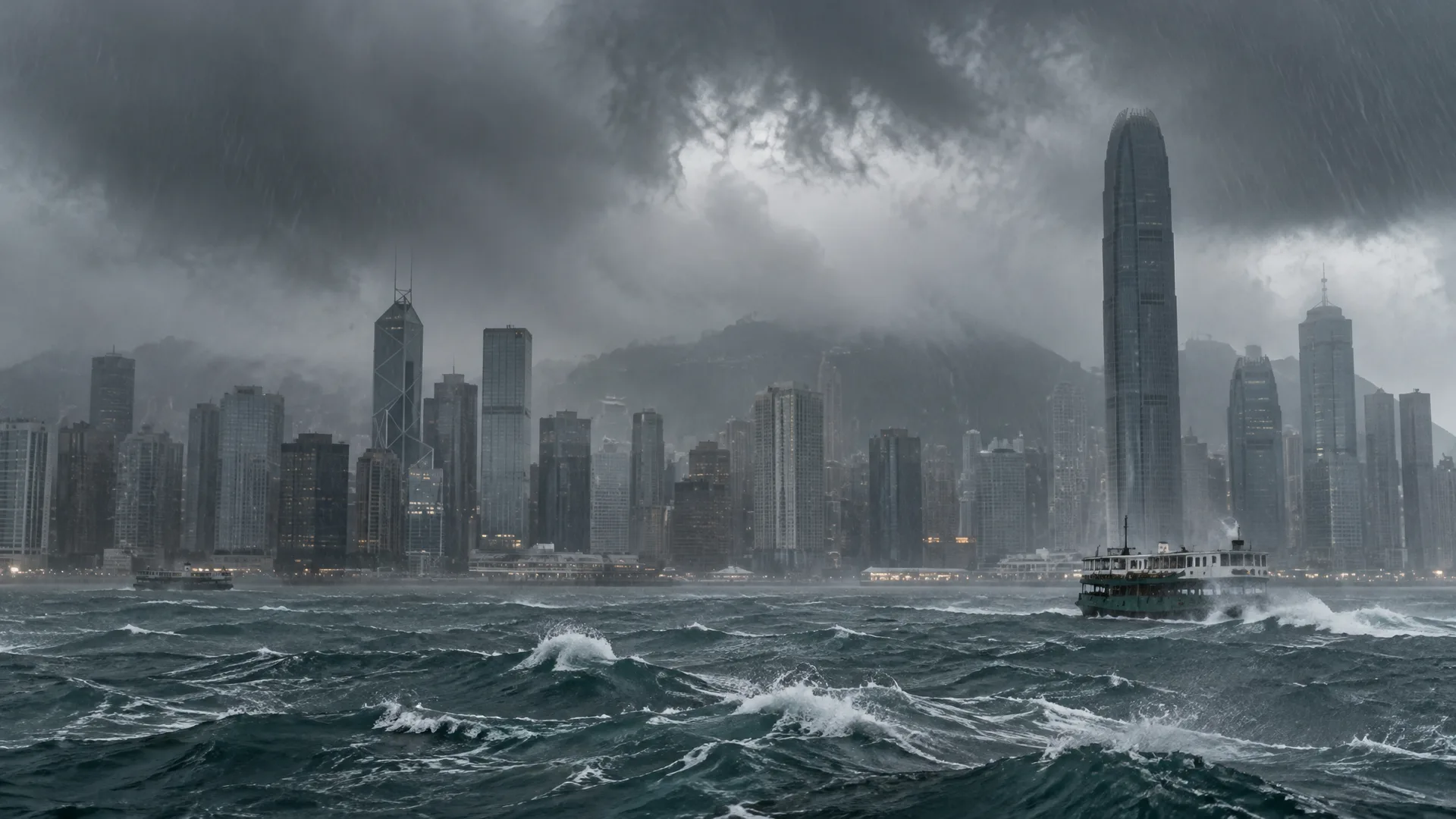
Hong Kong's tropical cyclone warning signals are among the most precise public-safety tools in Asia, and among the most consistently misread by corporate travel programs. A T8 does not automatically close every office, ground every flight or make every journey impossible. A T1 does not mean business as usual without any monitoring. The gap between what a signal means and what a company actually does in response is where travellers get stranded, decisions get improvised and duty of care breaks down. This guide translates the Hong Kong Observatory's four principal warning levels into a corporate decision matrix, explains the employment guidance that governs local workplaces, draws on the disruption of the 2023 and 2025 seasons, and sets out the pre-trip controls, sheltering protocols and ground-transport rules that turn a reactive scramble into a managed response.
Reading the Signal System Correctly
The Hong Kong Observatory issues tropical cyclone warning signals after considering expected winds, cyclone track and intensity, distance from Hong Kong, forecast uncertainty and interaction with other weather systems. Four signals matter most for corporate planning. Standby Signal No. 1 (T1) means a tropical cyclone is within roughly 800 kilometres and may affect the territory, immediate danger is generally limited, and normal activity usually continues, but this is the moment to review plans, not ignore them. Strong Wind Signal No. 3 (T3) means sustained winds of 41–62 km/h are blowing or expected near sea level, with gusts potentially exceeding 110 km/h, exposed, marine and time-critical plans should be modified and shelter options confirmed. Gale or Storm Signal No. 8 (T8) means sustained winds of 63–117 km/h with gusts potentially exceeding 180 km/h, widespread workplace and transport disruption should be expected, and the Observatory typically provides a pre-T8 announcement about two hours beforehand. Hurricane Signal No. 10 (T10) means sustained winds of at least 118 km/h with gusts potentially exceeding 220 km/h, travellers must remain inside a secure building away from exposed windows and doors. Critically, these signals are not a linear severity scale: T8 is not "eight times worse" than T1, and a lower signal does not rule out severe rainfall, flooding or stronger winds on high ground and offshore.
The Corporate Decision Matrix
The key transition in any typhoon event is the pre-T8 announcement, the roughly two-hour window before T8 is hoisted. That window is for completing shelter arrangements, not for sending travellers on uncertain journeys across the city. At T1, the action is to continue with monitoring: review flexible options, send an alert to travellers, verify contacts and escalate if T3 is forecast. At T3, defer exposed activities, reduce marine and coastal movement, check airline waivers and earlier departure options, and confirm hotel shelter arrangements. At T8, the default is to postpone all arrivals, departures and meetings; shelter in place; account for every traveller; and support extensions and rebooking, movement should be essential only and confirmed safe by official sources. At T10, all non-essential activity is suspended, travellers remain sheltered away from windows, no airport transfer is attempted, and welfare checks become frequent with priority support for vulnerable travellers. The matrix is a company baseline, not a substitute for judgement: tailor every decision to the actual forecast, rainstorm warnings, flooding or landslide conditions, traveller needs and real-time instructions from the Observatory, airport, airlines and transport operators.
Employment Guidance Is Not an Automatic Shutdown
Hong Kong has no legislation imposing an automatic citywide suspension of work whenever a typhoon signal is raised. The Labour Department publishes a Code of Practice in Times of Adverse Weather and "Extreme Conditions", guidance rather than a standalone law, though workplace arrangements must remain consistent with employment, occupational safety and employees' compensation obligations. The Code encourages employers and employees to agree arrangements in advance for reporting, early release, remote work and resumption. Employers should distinguish general staff from the minimum number of designated staff needed for essential operations, prioritise commuting and workplace safety, and act flexibly when transport disruption prevents a timely return. This explains why a local office, supplier, meeting venue, hotel and transport provider may respond differently to the same signal. Corporate visitors should obtain a direct operational confirmation rather than interpret a signal as a universal closure order. An "extreme conditions" announcement may also remain relevant after a major cyclone when flooding, landslides, power disruption or severe transport obstruction makes movement unsafe, a lowered typhoon signal does not, by itself, mean that travellers should immediately resume journeys.
Lessons From the 2023 and 2025 Seasons
Annual typhoon frequency alone says little about operational severity, and companies that calibrate preparedness to a quiet year will be caught out. In 2023, five tropical cyclones affected Hong Kong, slightly below the long-term average, yet Super Typhoon Saola prompted T10 on September 1, the first T10 since 2018, and halted airport operations for 20 hours. Typhoon Koinu left more than 10,000 travellers stranded. Severe Typhoon Haikui delivered 641.1 mm of rain at the Observatory headquarters, the highest tropical-cyclone rainfall since records began in 1884. The 2025 season was exceptionally active: 14 tropical cyclones required warning signals, the highest annual total since records began in 1946 and more than double the long-term average. T10 was issued twice, during Typhoon Wipha in July and Super Typhoon Ragasa in September. Ragasa illustrates the planning standard required: passenger flight operations were suspended for about 36 hours, more than 700 flights were cancelled, approximately 1,000 were affected overall and about 140,000 passengers were disrupted. The physical airport remained open to support stranded travellers, demonstrating the important distinction between an open terminal and available flights.
Airport Operations: Never Infer Flight Status From the Signal
No tropical cyclone signal automatically guarantees that a particular flight will operate or be cancelled. Aviation decisions depend on runway crosswinds, wind shear, turbulence, visibility, air traffic restrictions, aircraft positioning, ground-handling safety and crew availability. A flight may be technically possible during T8 while its crew, aircraft or ground handler is unavailable. Conversely, an airline may cancel well before T8 to move aircraft, protect staff and avoid passengers becoming stranded, before Ragasa, Hong Kong carriers repositioned a substantial proportion of their fleets outside the storm's path. Recovery creates a second risk period: aircraft and crews may be out of position, arriving flights compete for limited capacity, and cancelled passengers must be rebooked. During Ragasa, the airport used its Flight Rescheduling Control System to manage the return of operations, but a departure board showing resumed service does not mean that a specific traveller's flight, crew or airport transfer is ready. The corporate rule is clear: verify the flight directly with the airline, then verify safe airport access separately. Never advise a traveller to go outdoors during T8, T9 or T10 merely because an aircraft still appears scheduled.
Ground Transport and Airport Transfers
A booked transfer is a reservation, not proof that a vehicle, driver or safe route remains available. Before any airport journey during a typhoon event, confirm five things: the airline says the flight will operate; the driver or dispatch centre confirms the vehicle and pickup time; the proposed route is open and avoids coastal, low-lying, flooded or landslide-prone areas; the Airport Express, MTR, bus or ferry status has been checked directly with the operator; and the traveller has a fallback location if the transfer fails. At T8, buses and ferries commonly reduce or suspend service, while underground MTR sections may continue on a limited basis. At T9 or T10, the Airport Express and other exposed rail sections are suspended. Services do not restart the moment a signal is lowered, tracks and roads require inspection, debris may need clearing, and frequencies may remain reduced. Airport Express recovery can take several hours. Ferry services may be among the first suspended and last restored because wind and sea conditions can remain hazardous after conditions improve on land.
Pre-Trip Controls and Traveller Briefing
During the typhoon season, broadly May to November, with peak sensitivity from July through September, favour fares and hotels that allow changes, refunds or extensions. Avoid tight onward connections, particularly same-day ferry journeys, and build time around arrival and departure days. Front-load weather-sensitive outdoor or marine activities when forecasts permit, while retaining flexible alternatives. Critical meetings should have a remote option and an identified decision time for switching formats. Select accommodation with sturdy construction, direct access to reliable transport under normal conditions and without dependence on ferries or exposed routes. Before arrival, confirm where guests should shelter away from external glass, how the hotel will communicate emergency instructions, and whether the booking can be extended if transport or flights do not resume. Travellers should keep travel documents, insurance details and rebooking information accessible, carry working mobile data and a power bank, and monitor the Hong Kong Observatory website or MyObservatory app, airport and airline updates, and MTR or other transport-operator notices. The pre-trip briefing should be concise: monitor official alerts; at T1, review your plan; at T3, reduce exposed travel and prepare to shelter; on a pre-T8 announcement, return to your hotel before transport contracts; at T8 or above, remain indoors unless local authorities direct otherwise.
Building a Typhoon-Ready Corporate Travel Programme
Assign Named Decision Owners
Designate travel, security, HR and crisis leads before the season. Publish signal-based travel and check-in rules so every stakeholder knows their role without improvising under pressure.
Use the Pre-T8 Window Decisively
The roughly two-hour pre-T8 announcement is the critical action window. Direct travellers to shelter before transport winds down, not to the airport on an uncertain journey.
Maintain a Live Accountability List
Track every traveller's status: safe and confirmed; safe but requiring assistance; in transit; missed check-in; unconfirmed. Shorten check-in intervals as conditions escalate and escalate missed contacts promptly.
Verify Flight and Transfer Separately
Confirm the flight directly with the airline and confirm safe airport access separately. Never send a traveller outdoors during T8 or above because an aircraft still appears scheduled.
Book for Disruption, Not Just Price
During typhoon season, favour flexible fares, hotels that allow extensions and insurance that covers weather delays. Avoid same-day ferry connections and tight onward itineraries.
Conduct After-Action Reviews
After every significant activation, record decisions, traveller impacts, supplier performance and communication gaps. Update the decision matrix and test sheltering procedures before the next season.
Hong Kong's typhoon warning system is a precise, well-maintained tool, but it was designed to describe meteorological conditions, not to make corporate travel decisions for you. The gap between a signal and a safe, managed response is filled by pre-agreed decision rules, named owners, a live accountability list and the discipline to use the pre-T8 window for sheltering rather than scrambling. The 2023 and 2025 seasons demonstrated that a single severe event can disrupt hundreds of thousands of travellers and suspend airport operations for more than a day. Companies that treat the signal system as a binary switch, "T8 means cancel everything" or "no T8 means carry on", will be caught out by the nuance that actually governs how offices, transport and airlines respond. Those that build a signal-based decision matrix, test it before the season and maintain it through after-action reviews will move their people through East Asia's typhoon season with confidence, even when the weather does not cooperate.
Contact TRSS to build a typhoon-season travel risk framework for your East Asia programme
Get in Touch