
Hantavirus Outbreak on MV Hondius: What Travel Risk Managers Need to Know
An Andes virus outbreak on an Antarctic expedition cruise has killed 3 and infected 11 passengers from 6 countries — exposing critical gaps in expedition tourism risk management
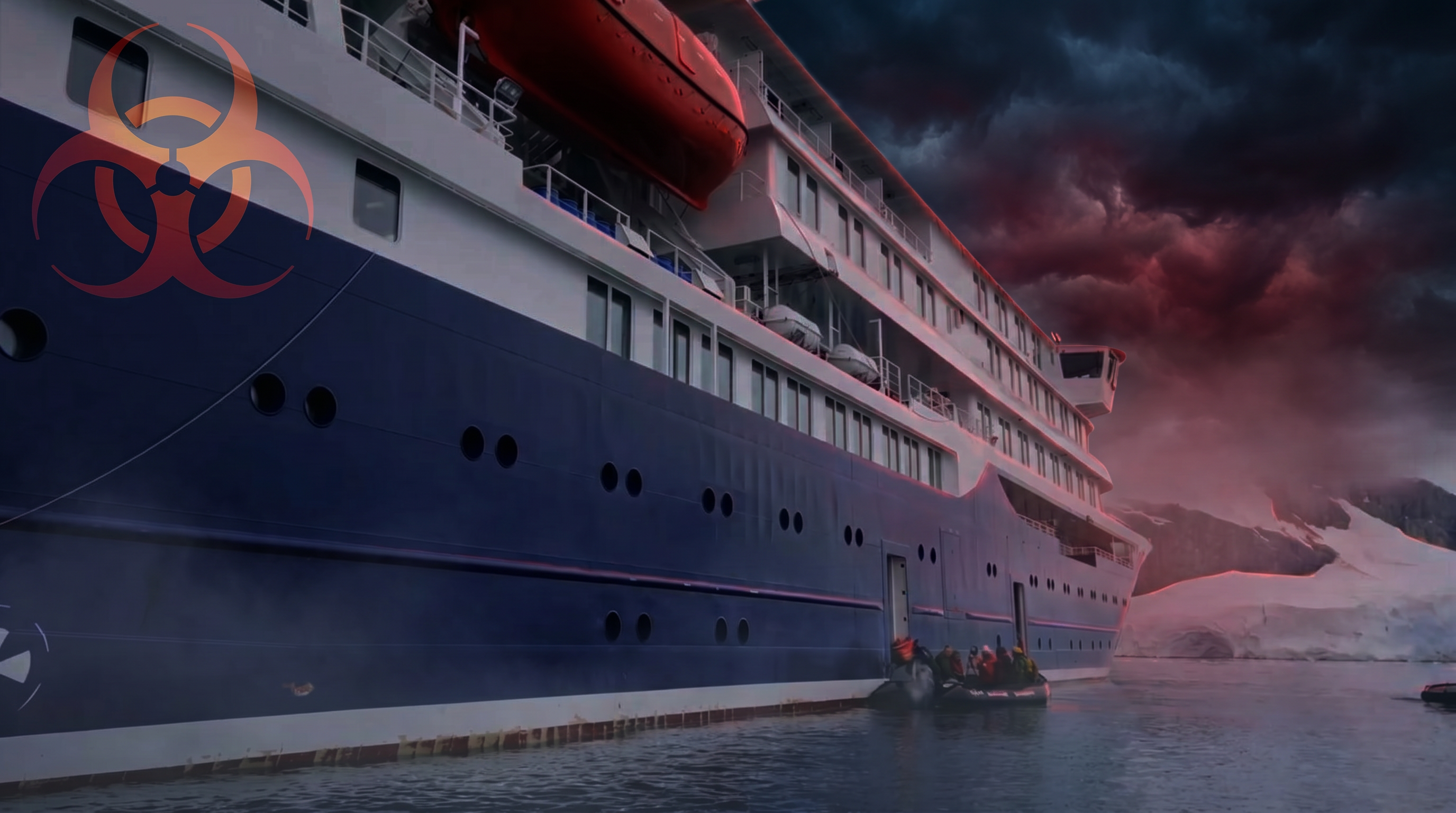
On 1 April 2026, the expedition cruise ship MV Hondius departed Ushuaia, Argentina, carrying 154 passengers and 65 crew on a voyage to Antarctica and the South Atlantic. Six weeks later, the World Health Organization issued a global alert: a confirmed outbreak of Andes virus — a lethal strain of hantavirus — had infected at least 11 passengers, killing 3. Passengers from the Netherlands, United Kingdom, Germany, Switzerland, France, and the United States are affected, with some still in quarantine or under medical surveillance. The incubation period of up to 42 days means further cases are expected. This is not a routine travel health incident. It is a defining moment for expedition tourism risk management — and a stark warning to every organization with a duty of care over travelers.
Active Outbreak — Situation Evolving
This article reflects confirmed information as of 13 May 2026. The 42-day incubation period for Andes virus means additional cases may be identified in the coming weeks. TRSS will update this analysis as the situation develops. Travel risk managers should monitor WHO and national public health authority advisories.
1. Outbreak Timeline: From Ushuaia to Global Alert
The MV Hondius, operated by Netherlands-based Oceanwide Expeditions, embarked on a multi-week Antarctic and South Atlantic expedition on 1 April 2026 from Ushuaia, Argentina — the world's southernmost port and the primary gateway to Antarctic tourism. The vessel carried 154 passengers from multiple nationalities and 65 crew members. During a shore excursion believed to have been on the Falkland Islands or South Georgia, passengers likely encountered infected rodent droppings, urine, or nesting material — the primary transmission route for Andes orthohantavirus. The first cases of severe respiratory illness emerged among passengers in late April and early May as individuals returned to their home countries. By 10 May, Andes virus was laboratory-confirmed. On 12 May 2026, the WHO issued a Disease Outbreak News alert, confirming 11 cases and 3 deaths. The case fatality rate stands at approximately 38% — consistent with the known lethality of hantavirus cardiopulmonary syndrome (HCPS). Critically, the WHO assessed the risk at the global level as low, but the risk to individuals who were on the ship as moderate, given the long incubation period of 4–42 days. Several passengers remain under active medical monitoring, and health authorities across Europe and the Americas are conducting contact tracing.
2. Andes Virus: Understanding the Threat
Andes orthohantavirus is a New World hantavirus primarily associated with the long-tailed colilargo rodent (Oligoryzomys longicaudatus), found across Argentina, Chile, and other parts of southern South America. Unlike most hantaviruses, Andes virus is the only strain with documented person-to-person transmission — though this is rare and typically occurs in close contacts during the acute phase. Transmission to humans occurs primarily through inhalation of aerosolized virus particles from infected rodent excreta: droppings, urine, or nesting material. In an expedition context, this can happen during wildlife observation, visits to abandoned structures, or walking through areas with high rodent density. The virus causes hantavirus cardiopulmonary syndrome (HCPS), a severe and often fatal disease. Initial symptoms resemble influenza — fever, myalgia, headache, and gastrointestinal complaints — before rapidly progressing to pulmonary oedema and cardiogenic shock. The incubation period ranges from 4 to 42 days, with a median of approximately 14–17 days, which explains why cases continue to emerge weeks after the voyage ended. There is no approved vaccine, no specific antiviral treatment, and management is purely supportive. Early recognition and intensive care significantly improve survival, but even with optimal care, case fatality rates for HCPS range from 30% to 50%.
3. Multi-Country Impact: A Complex International Response
The international dimension of this outbreak is one of its most challenging features. Passengers returned to at least six countries — the Netherlands, United Kingdom, Germany, Switzerland, France, and the United States — dispersing the risk across multiple public health systems and jurisdictions. In the Netherlands, the National Institute for Public Health and the Environment (RIVM) is coordinating the national response, including contact tracing and surveillance of affected Dutch nationals. The UK Health Security Agency (UKHSA) has confirmed at least one UK case and is monitoring returning travelers. German, Swiss, and French health authorities are conducting their own investigations. In the United States, the CDC issued a formal advisory and at least two affected Americans were placed under quarantine — one at the University of Nebraska Medical Center in Omaha (a facility designated for high-consequence infectious diseases) and another in Atlanta. Multiple passengers were evacuated to Tenerife in the Canary Islands on 10 May, where they received medical care and were placed under observation before being repatriated. This multi-country response has highlighted both the strengths and the gaps in international health coordination. The International Health Regulations (2005) provide a framework for cross-border outbreak response, but in practice, the speed and quality of information sharing varies considerably between countries.
4. Cruise & Expedition Tourism: A Unique Risk Profile
The MV Hondius outbreak is a powerful illustration of the unique infectious disease risk profile of expedition cruise tourism. Unlike conventional cruise ships — which operate on established routes with well-equipped ports of call — expedition vessels visit remote, medically underserved destinations where emergency response options are limited or non-existent. The Antarctic and sub-Antarctic region presents specific risks: rodent-borne diseases on remote islands; extreme cold and weather conditions that complicate medical evacuation; limited onboard medical facilities relative to the severity of potential emergencies; and multi-day sailing distances from the nearest hospital. The confined nature of a ship environment also creates conditions for disease amplification. Shared dining areas, cabins, and common spaces mean that if an infectious agent is present, exposure can be widespread before the first case is identified. While Andes virus is not considered easily transmissible between humans, the confined-space scenario demanded precautionary measures. The broader context is important. Antarctic tourism has grown rapidly: the International Association of Antarctica Tour Operators (IAATO) reported over 100,000 visitors to Antarctica in the 2023–24 season, a record number. This growth brings increased exposure to environmental health hazards, and the MV Hondius outbreak may be the first major test of whether the industry's safety frameworks are adequate.
5. Duty of Care Implications for Operators and Employers
The outbreak raises profound duty of care questions for both the expedition operator (Oceanwide Expeditions) and for employers whose staff were passengers on the voyage — whether on business travel, incentive trips, or employer-facilitated recreation. Under ISO 31030 (Travel Risk Management), organizations are expected to assess and manage health risks associated with travel, including exposure to endemic diseases at the destination. For expedition travel to sub-Antarctic regions, this should include pre-travel health briefings on rodent-borne diseases, the provision of appropriate personal protective equipment (PPE), and contingency plans for medical evacuation from remote locations. BS 8848 (Specification for the Provision of Visits, Fieldwork, Expeditions, and Adventurous Activities Outside the United Kingdom) is particularly relevant. This British Standard establishes requirements for organizations that send people abroad for adventurous activities, including risk assessment, incident management, and emergency response. ISO 21101 (Adventure Tourism — Safety Management Systems) applies directly to the expedition operator and requires a systematic approach to hazard identification and risk reduction in adventure tourism activities. The critical question now is whether adequate risk assessments were conducted prior to shore excursions, whether passengers were briefed on hantavirus transmission risks, and whether appropriate medical protocols were in place. Litigation is likely, and the outcome will depend heavily on the documentation and quality of the operator's pre-existing risk management framework.
6. Practical Guidance for Travel Risk Managers
This outbreak delivers several actionable lessons for travel risk managers and corporate security teams. First, pre-travel health risk assessment must explicitly address rodent-borne diseases for any travel to South America, sub-Antarctic islands, and rural or remote environments. Hantavirus is not a headline disease like malaria or dengue, and it is routinely overlooked in corporate travel health briefings. Second, expedition and adventure travel should be subject to enhanced due diligence before approval. Organizations should verify that tour operators hold relevant certifications (ISO 21101, BS 8848 compliance), maintain documented risk assessments for all excursion activities, and carry appropriate medical evacuation insurance and capability. Third, infectious disease response planning for remote travel must account for the unique challenges of maritime and polar environments. This includes: pre-arranged medical evacuation routes and agreements with air ambulance providers; onboard medical capability that extends beyond basic first aid; and clear protocols for isolation, quarantine, and repatriation in the event of an outbreak. Fourth, organizations should immediately review their travel policies to ensure that expedition and cruise travel — increasingly popular as corporate incentive trips and team-building activities — is subject to the same risk management rigour as travel to high-risk destinations. Finally, the 42-day incubation period for Andes virus means that post-travel health surveillance is essential. Travelers returning from at-risk regions should be monitored for symptoms, and travel health providers should be briefed on the relevant exposure history.
7. What This Means for Antarctic & Expedition Tourism
The MV Hondius outbreak is likely to have lasting consequences for the expedition tourism industry. Regulators, insurers, and the traveling public will demand greater transparency and higher safety standards from operators. Several developments are probable in the near term. First, enhanced biosecurity protocols for shore excursions in rodent-endemic areas. Operators will need to implement mandatory PPE (masks, gloves), designated safe zones, and pre-excursion environmental surveys. Second, strengthened medical capabilities on expedition vessels. The current regulatory framework for onboard medical facilities on small expedition ships is significantly less prescriptive than for large cruise liners. This gap needs to close. Third, increased scrutiny from insurers. Marine insurance and travel insurance underwriters will re-evaluate the risk profile of Antarctic and sub-Antarctic expedition cruises, potentially increasing premiums or imposing new conditions. Fourth, greater IAATO oversight. The International Association of Antarctica Tour Operators may strengthen its guidelines and audit processes in response to this incident. Fifth, regulatory action from flag states and port states. The MV Hondius is registered in Cyprus, and both Cypriot maritime authorities and Argentinian port authorities may investigate the circumstances of the outbreak. For the broader travel risk management community, this incident reinforces a critical principle: the most dangerous risks are often the ones that are not on your radar. Hantavirus was not a standard item on most expedition cruise risk registers before this outbreak. It will be now.
Key Recommendations for Travel Risk Managers
Update Pre-Travel Health Briefings
Include rodent-borne diseases (hantavirus, leptospirosis) in all pre-travel health risk assessments for South America, sub-Antarctic, and remote/rural destinations. Do not rely solely on standard tropical disease checklists.
Verify Operator Credentials
Before approving expedition or adventure travel, verify that operators comply with ISO 21101, BS 8848, and hold adequate medical evacuation insurance. Request copies of risk assessments for all planned activities.
Plan for Remote Medical Emergencies
Establish pre-arranged medical evacuation agreements for remote travel. Ensure onboard medical capabilities exceed basic first aid. Carry satellite communication devices for emergency coordination.
Implement Post-Travel Health Surveillance
For travelers returning from regions with endemic rodent-borne diseases, implement a 42-day monitoring protocol. Brief travel health providers on exposure history and symptom recognition for HCPS.
Review Expedition Travel Policies
Ensure expedition cruises and adventure travel — including corporate incentive trips — are subject to the same risk management rigour as travel to high-risk conflict zones.
Enhance Shore Excursion Biosecurity
Require PPE (masks, gloves) during excursions in rodent-endemic areas. Implement environmental surveys before landing. Establish decontamination protocols for footwear and equipment.
The MV Hondius Andes virus outbreak is a watershed moment for expedition tourism and travel risk management. Three lives have been lost. Eleven people have been infected across six countries. Dozens more remain under medical surveillance as the 42-day incubation window has not yet closed. This incident exposes fundamental weaknesses in how the travel industry assesses and manages infectious disease risk in remote environments. It demands an immediate and systemic response — from expedition operators, from employers with duty of care obligations, and from the regulatory and insurance frameworks that underpin international tourism. For travel risk managers, the lesson is clear: the wilderness does not respect corporate travel policies. Risk assessment must be as rigorous for an Antarctic expedition as it is for a deployment to a conflict zone. The stakes, as this outbreak has tragically demonstrated, are equally high.