
Floods, Fires and the New Geography of Travel Risk: A 2026 Extreme-Weather Briefing
Storm floods across Iberia, a record-breaking monsoon and typhoon season in Asia, and the worst wildfire year the UK has ever recorded — 2026 has made extreme weather a front-line travel risk, not a footnote
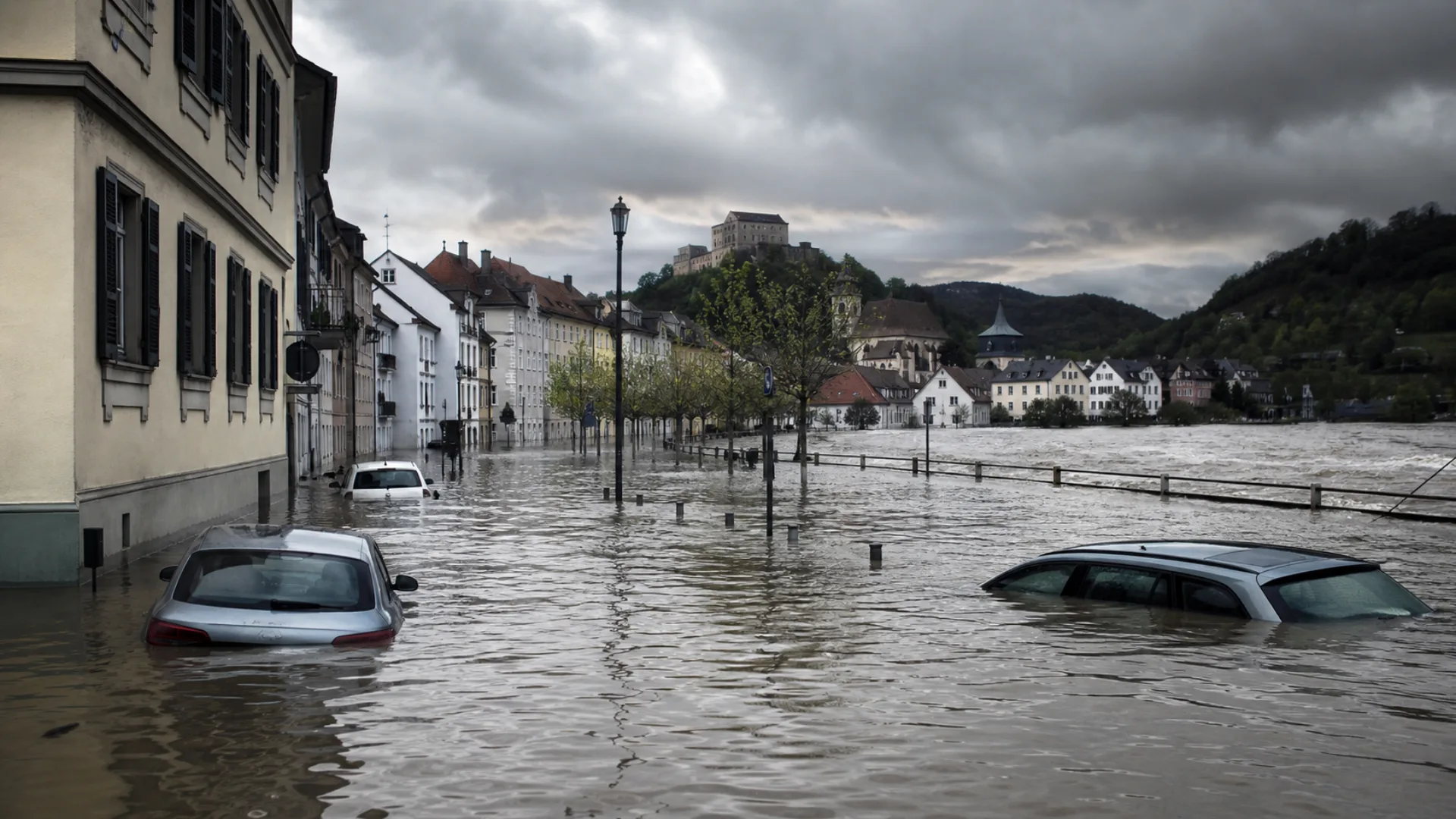
For most of the last decade, extreme weather sat at the edge of the travel-risk conversation — something to note in a pre-trip briefing, rarely something to plan a programme around. 2026 has ended that comfortable distance. In the space of a single year, storm-driven floods have displaced tens of thousands across Spain and Portugal, an intensified monsoon and an exceptionally active typhoon season have battered much of Asia, and the United Kingdom has recorded its worst wildfire season on record. These are not isolated freak events; they are the increasingly predictable output of a warming climate, and they are reshaping where, when and how safely people can travel. For organisations with a duty of care, the shift is fundamental: weather is no longer a backdrop to the trip — in many destinations it is now the primary hazard.
A Year of Weather Shocks, Not Weather Events
What makes 2026 different is not any single disaster but the relentlessness and the geographic spread. Europe entered mid-August enduring its fifth heatwave of the summer, with roughly 300 million people — more than half the continent — affected, drought lowering the Rhine and Danube enough to disrupt power generation, and wildfires burning in Britain, France, Italy and Croatia. Earlier in the year the same continent was under water. Asia, meanwhile, has faced near-continuous flooding since spring. When extreme heat, flooding and fire arrive in overlapping waves across multiple regions at once, the practical consequence for travel is that disruption becomes the base case rather than the exception. A programme built on the assumption of stable, predictable conditions is increasingly out of step with reality — and the organisations feeling that gap most acutely are the ones still treating each event as a surprise.
Iberia Under Water: Spain and Portugal’s Storm Season
The year opened with catastrophe in the Iberian Peninsula. From late January, a “train of storms” — Kristin, Leonardo and then Marta — struck Spain and Portugal in quick succession, driven by a negative North Atlantic Oscillation and an atmospheric river of moisture from an unusually warm Caribbean. Andalusia and Galicia were among the worst-hit Spanish regions; in Grazalema, rainfall exceeded 500mm in 24 hours. Rivers overflowed, soils saturated, and more than 11,000 people were displaced from their homes. In Portugal the government declared a state of calamity in 69 municipalities. Across the sequence of storms, at least nine people lost their lives. This came barely a year after the 2024 Valencia floods killed 229 people — a disaster still shaping public anger over delayed warnings and building on floodplains. For travellers, the lesson is that even mature, well-resourced European destinations can be brought to a standstill, with airports, rail and roads all affected simultaneously and with little margin for rerouting.
Asia’s Relentless Monsoon and Typhoon Season
Asia has borne the heaviest and most sustained flooding of 2026. Afghanistan’s Dur Baba district saw flash floods in late July that killed at least 31 people with hundreds missing. Bangladesh’s Chattogram recorded 412.3mm of rain in a single 24-hour period in early July. In China, more than 600 rivers rose above warning levels by mid-July — around 35% above the five-year average — with a deadly landslide in Chongqing and typhoons Noul and Maysak forcing mass evacuations. Vietnam and South Korea were hit by flooding and landslides in July, with Paju recording almost 200mm of rain. Forecasters expect the northwest Pacific typhoon season to produce 27 tropical storms, including 18 typhoons — the most active in over a decade, supercharged by record ocean heat. For anyone sending people into South, Southeast or East Asia in the second half of the year, this is not a tail risk to be acknowledged and filed — it is the defining operating condition of the season.
The UK Tinderbox: A Record Wildfire Season
Closer to home, the United Kingdom is having its worst wildfire year on record. By 10 August 2026, 966 wildfires had been recorded — well above the previous busiest years of 2022 (748) and 2025 (848) — with over 23,000 hectares burned and 72 individual fires larger than 30 hectares. A succession of heatwaves through May, June and July created tinderbox conditions, with an August spike hitting 38.1°C at Kew. Major fires struck the Mourne Mountains, the Brecon Beacons, the Elan Valley and the Peak District, where merging blazes near the Woodhead Pass forced long-term road closures. A fire in Grenoside, Sheffield, on 23 July destroyed or damaged ten homes. The season has driven over 700 evacuations and dozens of injuries. The significance for travel risk is cultural as much as operational: wildfire has long been seen as a Mediterranean or North American problem. 2026 has demonstrated that temperate, northern destinations once considered climatically “safe” are now firmly in scope.
Why Extreme Weather Breaks Travel Programmes
Extreme weather is uniquely disruptive because it attacks the whole system at once. A flood or wildfire does not simply close one road; it grounds flights, suspends rail, cuts power, overwhelms local emergency services and severs communications — often across an entire region and with cascading knock-on delays. It also lands in a duty-of-care blind spot. Destination risk ratings, built around crime, terrorism and political instability, rarely move for weather; a European capital keeps its low advisory level regardless of whether it is about to flood or choke on wildfire smoke. Travel policies that meticulously address security threats often say nothing about extreme temperature, flooding or fire. The result is a systematic gap between where the danger actually is and where the framework is looking. As weather shocks become more frequent and more geographically dispersed, that gap is no longer a theoretical weakness — it is the single fastest-growing source of unmanaged travel risk for most organisations.
Building Weather Resilience Into Travel Risk
The encouraging news is that weather risk is, relative to most security risks, highly forecastable and therefore highly manageable. Floods, heatwaves and high fire-danger days are predicted days in advance, which means the discipline is proactive rather than reactive. Practically, this means integrating meteorological and hydrological forecasting into pre-trip planning, defining clear thresholds that trigger a review or postponement, and building genuine slack into itineraries during high-risk seasons. It means briefing travellers on the specific hazard of the destination — flash-flood zones, wildfire smoke and air quality, evacuation routes — and ensuring they can reach help and reroute quickly when conditions deteriorate. And it means treating extreme weather as a standing category in the travel-risk framework, on the same footing as security and health, as the ISO 31030 approach to duty of care increasingly expects. The organisations that adapt will absorb these shocks as routine; those that do not will keep meeting each one as a fresh emergency.
Managing Extreme Weather in Your Travel Programme
Integrate Weather Forecasting Into Planning
Fold meteorological and flood forecasts into pre-trip risk assessment, the same way you monitor security and health. Most weather shocks are visible days ahead.
Set Thresholds That Trigger Action
Define the flood, heat and fire-danger levels that automatically prompt an itinerary review — and give someone the authority to postpone or reroute a trip.
Map the Destination-Specific Hazard
Flash-flood basins, wildfire-prone regions and heat-vulnerable transport differ by location. Brief travellers on the specific threat and evacuation routes where they are going.
Build Slack Into High-Risk Seasons
Expect airport, rail and road disruption during monsoon, storm and fire seasons. Add buffer time and contingency routing so one event does not collapse a schedule.
Keep Communications and Tracking Resilient
Extreme weather cuts power and networks. Ensure travellers can be located and can reach help even when local infrastructure fails, and confirm check-in protocols.
Treat Weather as a Standing Risk Category
Put extreme weather on the same footing as security and health in your framework, in line with ISO 31030, so it is planned for continuously rather than reacted to.
2026 has removed any remaining doubt that extreme weather belongs at the centre of travel-risk management rather than its margins. Iberian floods, an unrelenting Asian flood and typhoon season, and the worst wildfire year the UK has ever seen are not a run of bad luck — they are the visible face of a warming, fastest-warming-in-Europe climate that is expanding both the intensity and the geography of weather hazards. The destinations at risk are no longer only the obvious ones, and the disruption is no longer occasional. Yet weather remains, uniquely, a risk that foresight can largely neutralise: it is forecastable, its impacts are well understood, and the mitigations are practical and low-cost. The organisations that build weather into their duty-of-care framework now — as a standing category, not an afterthought — will protect their people and their operations through a decade in which these shocks only become more frequent. Those that keep filing floods and fires under “bad weather” will keep discovering, the hard way, that the climate has already moved on.
Contact TRSS to build extreme-weather and climate disruption into your travel-risk framework before the next shock
Get in Touch