
Air Travel Crisis: Four Simultaneous Disruptions Are Breaking the System
TSA Collapse, European Strikes, Jet Fuel Shock, and the LaGuardia Crash Aftermath Converge into the Worst Week for Air Travel in Years
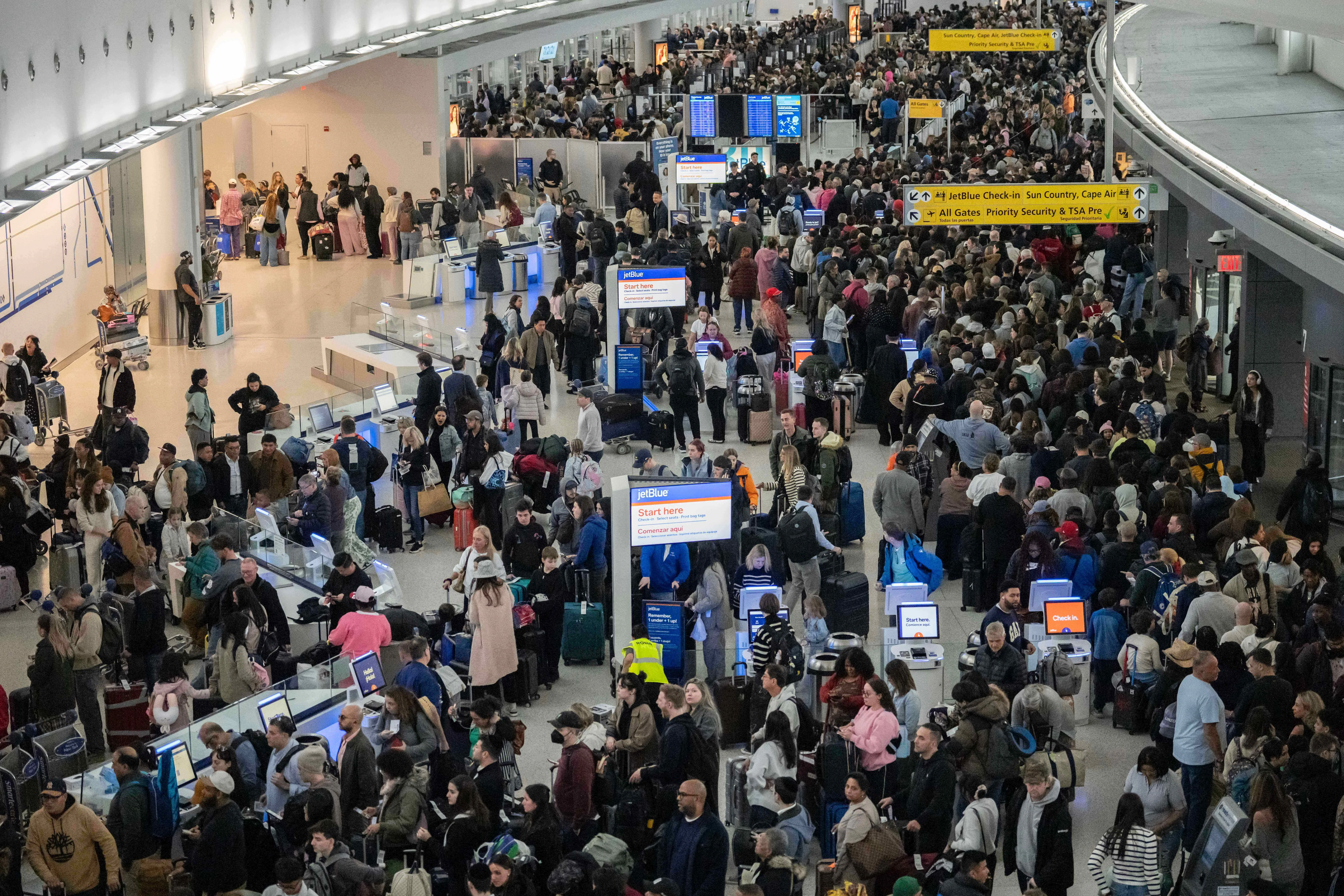
On March 27, 2026, American air travel hit a breaking point. A single day produced 3,273 flight disruptions—261 cancellations and 3,012 delays—as spring storms, a 42-day TSA shutdown, and the closure of LaGuardia's only operational runway collided simultaneously. But this was not just an American problem. European airline strikes, the Strait of Hormuz closure driving jet fuel to nearly $4 per gallon, and escalating Middle East tensions have created a global air travel crisis with no precedent in recent memory. For organizations with traveling employees, this is not a sequence of isolated disruptions—it is a systemic failure requiring immediate business continuity action.
The Crisis by Numbers
Crisis 1: The TSA Shutdown Enters Its Seventh Week
The DHS shutdown that began February 14 has escalated dramatically. Over 460 TSA officers have now quit—up from 366 a week ago—and callout rates have reached 55% at Houston Hobby Airport. Nearly $1 billion in TSA payroll remains unpaid. At Atlanta Hartsfield-Jackson, the world's busiest airport, wait times exceeded 3 hours on March 26. The TSA's national deployment force—surge staff who normally cover gaps—is completely exhausted. Congress left for a two-week recess without a deal, meaning the earliest possible resolution is mid-April. TSA officials have warned that smaller airports may be forced to close entirely if staffing continues to deteriorate. This is no longer a staffing inconvenience—it is an active infrastructure failure.
Crisis 2: European Airline Strikes Cascade Across the Continent
Europe is experiencing its own parallel disruption. Lufthansa pilots walked out March 12–13, grounding hundreds of flights across Germany. Brussels Airport saw all departures canceled on multiple days due to security staff industrial action. Milan's airports were hit by strikes on March 18. Air France cabin crews have staged rolling walkouts. These strikes are not random—they reflect systemic labor disputes across European aviation as airlines push cost-cutting measures post-COVID. For any organization routing travel through European hubs, connection reliability has collapsed. Frankfurt, Brussels, Paris CDG, and Milan Malpensa are all operating unpredictably.
Crisis 3: Strait of Hormuz Closure Doubles Jet Fuel Costs
On March 4, 2026, Iran effectively closed the Strait of Hormuz to commercial shipping following military escalation with Israel. The immediate impact on aviation: jet fuel prices have nearly doubled to approximately $4 per gallon. The U.S. Energy Information Administration revised its 2026 jet fuel forecast to $2.67 per gallon on average—a 37% increase from pre-crisis projections. Airlines are responding with emergency fuel surcharges. Some international routes have seen fare increases of 200–300%. Budget carriers are suspending unprofitable routes entirely. Polish carrier LOT has already suspended flights to Tel Aviv, Riyadh, and Beirut. The fuel price shock alone would constitute a major disruption; combined with the other three crises, it is compounding costs exponentially.
Crisis 4: LaGuardia Crash Aftermath and Runway Closure
The Air Canada regional jet crash at LaGuardia Airport on March 23 killed 2 passengers and injured 89, leading to the immediate closure of one of the airport's two runways. LaGuardia is now operating at roughly half capacity, with cascading effects across the entire Northeast corridor. The NTSB investigation is ongoing with no timeline for runway restoration. Flight slots at LaGuardia—already among the most constrained in the country—are being dramatically reduced. Delays at JFK and Newark have increased as airlines attempt to reroute LaGuardia traffic. The ripple effects extend nationwide: any itinerary touching New York airspace is experiencing elevated delay risk.
The "Triple Crisis" Day: March 27, 2026
March 27 demonstrated what happens when multiple systemic failures collide. Spring thunderstorms swept the Eastern seaboard, but in a normal year, weather alone would cause manageable disruptions. On this day, airports were already operating with skeleton TSA crews, LaGuardia was at half capacity, and airlines were scrambling to manage fuel-surcharge economics. The result: 3,273 total disruptions in a single day—2 61 cancellations and 3,012 delays. Nearly every major hub was affected. For travelers caught in the system, rebooking options were severely limited because there was no slack capacity anywhere. This was not bad luck—it was the predictable outcome of compounding vulnerabilities.
Easter Weekend: The Next Pressure Point
Easter weekend—April 4–6, 2026—represents the biggest holiday travel weekend of spring, and it is approaching with all four crisis factors still active. Airlines for America projects a 4% year-over-year increase in Easter travel demand. TSA staffing will be at its worst following yet another missed paycheck. European strikes show no sign of resolution. Jet fuel remains elevated. Organizations that do not adjust Easter-period travel plans now will face compounding disruption risks. The window to rebook, reroute, or cancel is closing rapidly as available seats disappear.
Duty of Care Implications
This convergence of crises creates duty of care obligations that go beyond normal travel risk management. When four simultaneous, well-documented disruption factors are affecting global air travel, organizations cannot claim ignorance. Sending employees into a system experiencing 3,200+ daily disruptions without adjusted protocols represents a foreseeable risk. Travel policies written for normal operating conditions are inadequate. Legal teams should evaluate whether existing duty of care frameworks address compound crisis scenarios. Insurance coverage for trip interruption, medical emergencies during extended delays, and stranded-traveler costs should be reviewed immediately. The standard of care has shifted—what was reasonable travel planning in February 2026 is no longer sufficient in April 2026.
Immediate Business Continuity Actions
Activate Crisis Travel Protocols
Shift from standard to crisis-mode travel policies. All non-essential air travel should be paused or converted to virtual. Essential travel requires documented justification and contingency plans.
Build 4-Hour Airport Buffers
Mandate minimum 4-hour pre-departure arrivals for domestic U.S. flights and 5 hours for international. For connections, require minimum 4-hour layovers. No exceptions.
Avoid High-Risk Hubs
Reroute travel away from LaGuardia, Houston Hobby, and Atlanta where TSA callout rates are highest. Avoid Frankfurt, Brussels, and Milan during active European strike periods. Use direct flights wherever possible.
Switch to Fully Flexible Fares
The premium for flexible tickets is minimal compared to stranded-employee costs. All bookings should be refundable or changeable without penalty through at least May 2026.
Pre-Position Contingency Plans
For every business-critical trip, identify backup flights, ground transport alternatives (Amtrak, rental car), and pre-approved hotel authorization for stranded employees.
Monitor and Communicate Daily
Establish daily travel risk briefings for the duration of the crisis. Use TSA wait-time tools, airline disruption trackers, and European NOTAM feeds. Communicate proactively with all traveling employees.
Outlook: No Resolution Before Mid-April
None of the four crisis factors has a near-term resolution. Congress is on recess until mid-April, making TSA funding impossible before then—and even optimistic scenarios assume weeks of negotiation after Congress returns. European labor disputes are structural and will recur through spring. The Strait of Hormuz situation depends on Iran-Israel de-escalation that shows no signs of occurring; the EIA projects elevated fuel prices through at least Q3 2026. LaGuardia's runway timeline is unknown pending NTSB investigation. Organizations should plan for sustained disruption through at least June 2026 and build travel budgets that account for 30–50% higher costs due to fuel surcharges, flexible fares, and contingency logistics. The organizations that adapt fastest will maintain operational continuity; those that wait for normal to return will face compounding losses.
March 2026 has exposed a fundamental vulnerability in global air travel: the system has no resilience margin. When a government shutdown, labor strikes, a geopolitical fuel crisis, and a major accident converge, there is no surge capacity to absorb the shock. For travel risk managers and business continuity professionals, this is the scenario your frameworks were designed for—multiple simultaneous disruptions with no clear end date. The organizations that act decisively now—pausing non-essential travel, building contingency depth, and communicating transparently with employees—will weather this crisis. Those that treat it as a series of isolated incidents will learn the hard way that compound risk is multiplicative, not additive.