
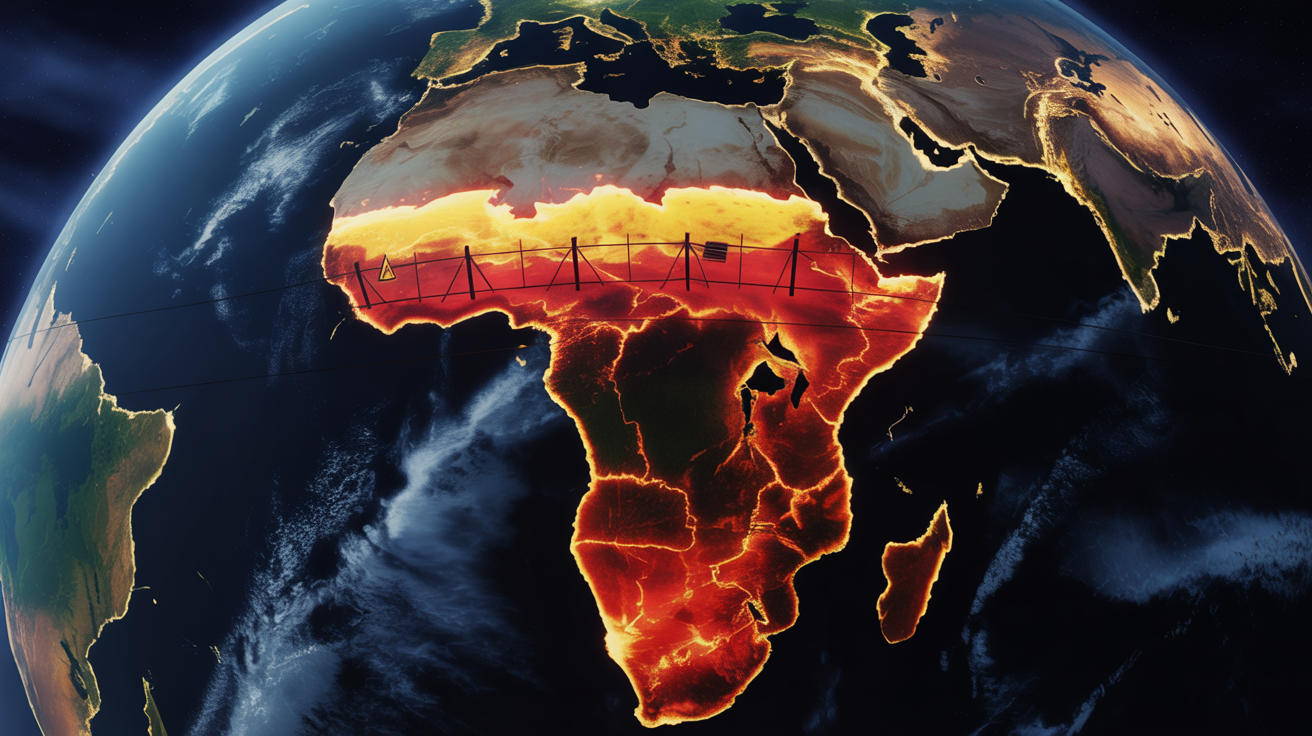
Africa’s Expanding “Do Not Travel” Belt: 9 Nations, One Crisis Corridor
From the Sahel to the Horn of Africa, a widening arc of instability is reshaping corporate travel risk. Nine African countries now carry the US State Department’s highest warning — and the belt is expanding.
9 African Countries Under US Level 4 Advisory
Burkina Faso • Central African Republic • Chad • Libya • Mali • Niger • Somalia • South Sudan • Sudan — representing nearly half of all Level 4 designated countries worldwide.
In May 2026, nine African countries sit on the United States’ Level 4 “Do Not Travel” list — the highest and most severe advisory the State Department issues. These nine nations represent nearly half of the 21 countries worldwide designated at this level. The affected belt stretches from the western Sahel through Central Africa to the Horn, forming a continuous corridor of armed conflict, terrorism, kidnapping, and state fragility. For organizations operating in extractive industries, humanitarian aid, development, and diplomacy, this expanding crisis corridor is not a distant geopolitical abstraction — it is an immediate, operational reality that demands urgent action on duty of care, travel risk management, and strategic planning.
The Nine: A Country-by-Country Briefing
The nine African nations currently under US Level 4 “Do Not Travel” advisory span three distinct but interconnected crisis zones. In the Western Sahel, Burkina Faso faces a multidimensional security collapse with 2.1 million internally displaced, armed groups imposing blockades on entire towns, and extremist attacks extending southward toward coastal states. Mali, Russia’s largest security deployment in the Sahel, remains gripped by insurgency in the north and centre, with UN and Western forces withdrawn and the military junta reliant on Russian Africa Corps. Niger, added to Level 4 in January 2026 following a gunfight at Diori Hamani International Airport in Niamey, faces terrorism, kidnapping, and a catastrophic healthcare deficit. Chad, the most recent addition in April 2026, is experiencing regional spillover from Sudan and escalating border violence. In Central and North Africa, the Central African Republic remains fractured between the Bangui government and armed groups controlling vast territory, while Libya’s governance breakdown persists with rival authorities and militia control. In the Horn, Somalia’s al-Shabaab insurgency continues to threaten the capital and major cities, South Sudan teeters between fragile peace and renewed civil conflict, and Sudan’s war between the Sudanese Armed Forces and the Rapid Support Forces has created one of the world’s worst humanitarian catastrophes.
The Drivers: Why the Belt is Expanding
The expansion of Africa’s “Do Not Travel” belt is driven by five interlocking crises. First, the wave of military coups since 2020 — Mali (2020, 2021), Burkina Faso (2022), Niger (2023), and Chad’s ongoing military transition since 2021 — has shattered regional security cooperation. The Alliance of Sahel States (AES), formed by the juntas in Mali, Burkina Faso, and Niger, withdrew from ECOWAS in January 2024, severing diplomatic channels and fragmenting counterterrorism coordination. Second, jihadist insurgencies are expanding, not contracting. JNIM (al-Qaeda affiliate) and ISWAP/ISSP (Islamic State affiliates) now control more territory across the Sahel than at any point since the 2012 Mali crisis. JNIM has expanded southward into Benin, Togo, and Ghana, threatening to open a new front along the West African coast. Third, the withdrawal of French and UN peacekeeping forces has created a security vacuum that Russia’s Africa Corps — the rebranded successor to the Wagner Group, now under direct Kremlin control — has partially filled through opaque resource-for-security deals. However, Russia’s approach has produced mixed results at best, as evidenced by its humiliating withdrawal from Kidal in northern Mali under Tuareg rebel pressure in April 2026. Fourth, the climate crisis is accelerating instability through extreme flooding, drought, and crop failure, pushing 47.7 million people toward acute food insecurity during the June–August 2026 lean season. Fifth, the Sudan war has triggered massive cross-border displacement into Chad (over 1.3 million refugees since April 2023), arms trafficking, and regional destabilisation.
The Human Cost: Displacement and Humanitarian Crisis
The human toll of the expanding instability belt is staggering. More than 7.4 million people are internally displaced across the Sahel, with Nigeria (3.6M), Burkina Faso (2.1M), Cameroon (500K), and Mali (415K) bearing the heaviest burden. At least 2.6 million have fled across borders, a 27% increase year-on-year. By the end of 2026, the broader Sahel Plus region is expected to host 5.6 million forcibly displaced and stateless individuals. The crisis is particularly devastating for children. Nearly 7.5 million children across the Central Sahel require urgent humanitarian assistance. Over 8,400 schools were rendered inaccessible in 2025 alone, and the UN has documented more than 1,500 grave violations against children, including killing, abduction, and recruitment by armed groups. Humanitarian access is severely constrained: aid agencies requested $4.9 billion to assist 10.4 million vulnerable people in the region, but as of March 2026, only $1.4 billion — just 29% — had been received. This funding gap is directly translating into preventable deaths. For corporate organizations, these figures represent the operational environment their personnel may be entering — or may need to evacuate from at short notice.
Corporate Impact: Extractive Industries Under Pressure
The extractive sector — mining, oil, gas, and critical minerals — faces the most direct impact from the expanding instability belt. Africa holds an estimated 30% of the world’s mineral reserves, including critical minerals essential for the green energy transition: lithium, cobalt, manganese, and rare earths. The Sahel region is particularly rich in gold and uranium. However, operating in these environments has become exponentially more dangerous and politically complex. In Mali, the military junta has rewritten the mining code to increase state control over natural resources, while Russian Africa Corps has taken direct control of gold mines such as Intahaka. In Niger, Russia is actively pursuing concessions to displace French access to uranium mines — a strategic play that could impact Europe’s nuclear energy supply. In the Central African Republic, companies linked to the former Wagner leadership control gold and diamond concessions. For Western mining companies, the calculus has shifted dramatically: not only are security costs escalating, but the geopolitical competition for resource access has introduced new risks around sanctions compliance, reputational exposure, and forced partnership with state-backed paramilitary actors. Duty of care obligations for mining personnel in these environments require hardened security protocols, medical evacuation plans, and continuous risk monitoring far beyond standard business travel provisions.
NGO and Humanitarian Operations: The Duty of Care Dilemma
Non-governmental organisations and humanitarian agencies face a particular dilemma: the populations most in need of assistance are concentrated in the most dangerous areas, where the duty of care risks to personnel are highest. The operational environment for NGOs has deteriorated significantly. Bureaucratic restrictions imposed by military governments, movement limitations, and direct security threats from armed groups have severely hampered humanitarian access. In Burkina Faso, entire communities are under armed blockade, with over one million people cut off from supplies and services. In areas controlled by JNIM or ISWAP, humanitarian workers face kidnapping and extortion threats. In Sudan, active combat between the SAF and RSF makes aid delivery extremely hazardous. The kidnapping risk is acute and growing. South Africa recorded nearly 5,000 abductions in Q3 2025/26, a 6.8% increase. Cameroon’s kidnapping rate stands at 6.36 per 100,000 inhabitants. Across the Sahel, targeting of aid workers has increased as armed groups seek to control humanitarian resources. For organisations deploying staff into these environments, the duty of care obligations are extreme: advance security assessments, armoured transport, hostile environment awareness training (HEAT), satellite communications, and robust evacuation plans are not optional — they are baseline requirements.
The Russia Factor: Africa Corps and the New Security Landscape
Russia’s Africa Corps — the state-controlled successor to the Wagner Group — has fundamentally altered the security landscape across the Sahel. Operating under the direct authority of the Russian Ministry of Defence and GRU military intelligence since Prigozhin’s death in 2023, the Africa Corps provides military support to Sahelian juntas in exchange for privileged access to natural resources. The scale of deployment is significant: in Mali, it represents Russia’s largest African contingent; in the Central African Republic, Russian personnel have been embedded since 2018, initially around 1,400 strong; in Sudan, numbers reached 2,100 before declining to approximately 1,500. Russian military specialists and equipment have also arrived in Burkina Faso and Niger. The model is transactional: security without the human rights conditions imposed by Western partners, in exchange for gold, diamond, and uranium concessions. Russia has reportedly extracted $2.5 billion worth of gold from Africa in recent years. However, the Africa Corps’s effectiveness is questionable. Its withdrawal from Kidal in northern Mali under Tuareg rebel pressure in April 2026 was a major reputational blow to Moscow. Both the Wagner Group and Africa Corps have been accused of severe human rights violations, including mass killings, summary executions, civilian targeting, and enforced disappearances. For corporate actors, Russia’s presence introduces additional compliance risks: sanctions exposure, reputational contamination, and the potential for forced interaction with sanctioned entities in resource-rich areas.
Risk Management Framework: Operating in the Crisis Belt
Organizations that must maintain operations within the Level 4 belt — whether in extractive industries, humanitarian work, diplomacy, or development — require a fundamentally different approach to travel risk management than standard corporate frameworks provide. Standard duty of care provisions are inadequate for environments characterised by armed conflict, terrorism, kidnapping, and state fragility. A crisis-belt risk management framework must include: (1) Continuous intelligence monitoring with real-time alert systems covering all nine Level 4 countries plus the adjacent spillover states. (2) Personnel tracking and communication systems that function in low-connectivity environments, including satellite devices. (3) Tiered travel authorisation protocols that require senior-level approval for all travel into Level 4 countries, with no exceptions. (4) Comprehensive pre-deployment training, including Hostile Environment Awareness Training (HEAT) and medical first response. (5) Medical evacuation plans with pre-negotiated contracts with specialist providers, given the extremely limited healthcare capacity in most affected areas. (6) Security escort and armoured transport arrangements in active conflict zones. (7) Kidnap, ransom, and extortion (KR&E) insurance and crisis response retainers. (8) Regular scenario-based exercises testing evacuation, communication failure, and mass casualty events. (9) Mental health and psychosocial support for personnel operating under sustained high-threat conditions.
Key Recommendations for Travel Risk Managers
Prohibit Non-Essential Travel
Enforce a strict ban on all non-essential travel to Level 4 countries. Define "essential" narrowly and require C-suite or board-level approval for every exception.
Implement Crisis-Grade Monitoring
Deploy real-time intelligence platforms covering all 9 Level 4 countries and adjacent spillover states. Maintain 24/7 operations center capability during active deployments.
Mandate HEAT for All Deploying Personnel
Require Hostile Environment Awareness Training before any deployment into the crisis belt. Include medical first response, kidnap survival, and communication protocols.
Pre-Position Evacuation Plans
Maintain pre-negotiated medical and security evacuation contracts. Map evacuation routes for each deployment location with at least two redundant options.
Review Insurance and KR&E Coverage
Ensure kidnap, ransom, and extortion insurance is current for all operating locations. Verify that war risk and political violence exclusions do not create coverage gaps.
Monitor Sanctions and Compliance Exposure
In regions with Russia Africa Corps presence, conduct enhanced due diligence on all local partners, suppliers, and security providers to avoid sanctions violations.
Africa’s expanding “Do Not Travel” belt is not a temporary phenomenon — it is a structural shift in the continent’s security landscape that will persist for years. The convergence of military coups, jihadist expansion, great-power competition, climate crisis, and humanitarian catastrophe has created a corridor of instability stretching 5,000 kilometres from the Atlantic to the Indian Ocean. For organizations with operations or personnel in or near the affected countries, the imperative is clear: legacy travel risk management frameworks are insufficient. The crisis belt demands a fundamentally upgraded approach — one that treats every deployment as a high-risk operation, invests in intelligence and training, maintains robust evacuation capability, and never loses sight of the human beings at the centre of every risk management decision. The cost of inaction — in lives, in liability, and in organisational reputation — far exceeds the cost of preparation.